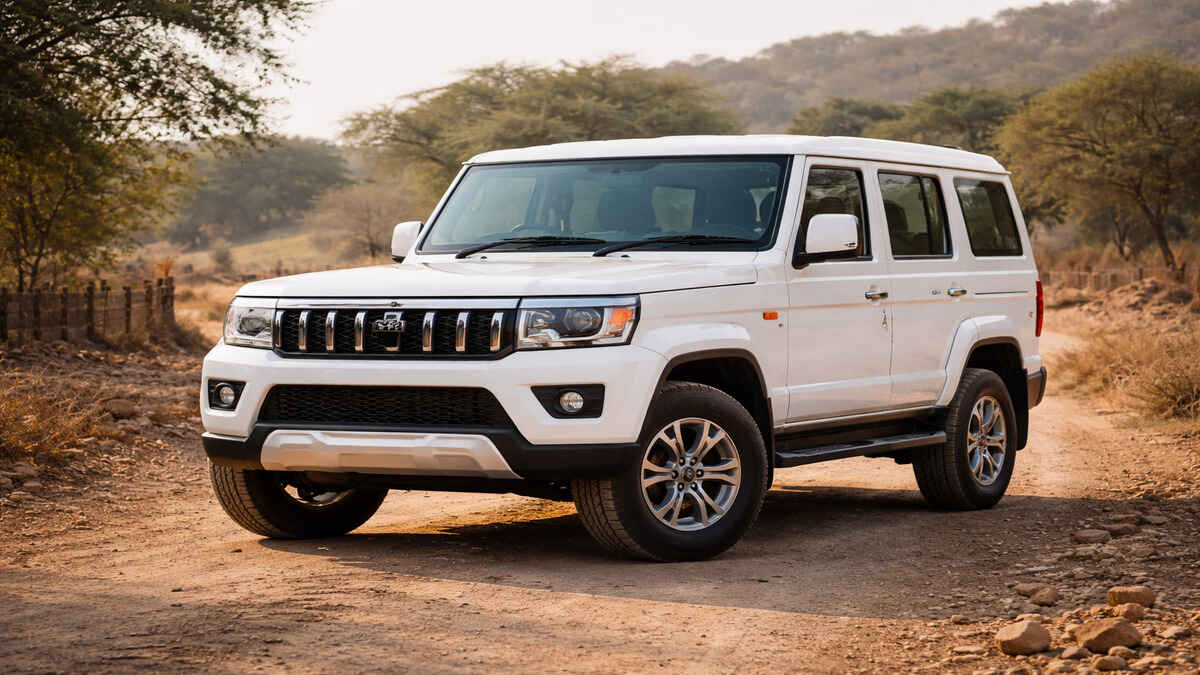
Hello friends… Hope you’re doing well today. So today, let’s talk about a vehicle almost every Indian has seen at least once in life. Maybe more than once. Sometimes daily. Yes, I’m talking about the Mahindra Bolero 2026.
I recently saw the updated Bolero up close, spent some time around it, and also spoke to a few owners of older Boleros. And honestly… this car still has that same old-school charm. No drama. No show-off. Just work, work, and more work.
Let’s break it down properly, as real people do.
Introduction – Real First Impression
People are talking about the Mahindra Bolero 2026 because… well, it refuses to die.
While every brand is running behind screens, touch panels, and fancy words, Bolero is still standing there like, “Bhai, kaam bolta hai.”
When I first saw the 2026 version on the road, my reaction was simple —
“Yep, that’s a Bolero. Solid. Tall. Familiar.”
Mahindra hasn’t tried to make it something it’s not. And honestly, that’s why people still trust it, especially in small towns, villages, and rough areas.
Design & Road Presence
Let’s be clear.
The Bolero doesn’t look modern. And it doesn’t want to.
In real life, the boxy shape, flat bonnet, and straight lines give it a strong, no-nonsense look. It stands tall, and that height matters on Indian roads. Potholes, broken patches, mud roads — Bolero looks ready for all of it.
From the front, it still has that tough face. Simple grille. Big headlamps. Nothing fancy.
Side profile? Pure utility vehicle vibes.
Rear? Plain and honest.
Colours are basic too — white, silver, maybe brown shades. No bright reds or blues. This car isn’t trying to impress Instagram. It’s trying to survive in India.
On the road, people notice it. Especially in rural areas. There’s a sense of respect attached to it.
Engine, Performance & Ride Feel
The Mahindra Bolero 2026 continues with a diesel engine, and honestly, that’s expected.
It’s not about speed. It’s about torque and reliability.
City Driving
In city traffic, the Bolero feels heavy but manageable.
You sit high. You can see over most cars. That helps a lot.
The clutch is on the heavier side. In bumper-to-bumper traffic, your left leg will feel it. I won’t lie.
But the engine pulls cleanly at low speeds. You don’t need to shift gears again and again.
Highway Performance
On highways, cruising at 80–90 km/h feels comfortable.
Above that? You’ll feel engine noise and vibrations creeping in.
This is not a highway racer.
Overtaking needs planning. Drop a gear, wait for the gap, then go.
Ride Feel
Suspension is tuned for bad roads, not smooth highways.
On broken village roads, Bolero feels at home.
On smooth city roads, it feels stiff.
But that stiffness gives confidence when the road suddenly disappears.
Mileage & Real-World Fuel Efficiency
Mahindra usually claims mileage around 16 km/l (diesel).
Now, real talk.
- City mileage: 13–14 km/l
- Highway mileage: 15–16 km/l
This is with normal driving, AC on, Indian traffic, and load.
For a vehicle this heavy and rugged, that mileage is actually practical. If your daily running is high, diesel still makes sense here.
ALSO READ: Maruti Suzuki Baleno 2025 Review – Price, Mileage & Real Feel
Comfort, Seating & Ride Quality
Let’s talk comfort. And let’s be honest again.
Seats
Front seats are decent. Upright driving position. Good visibility.
Long drives? You’ll feel tired after a few hours. It’s not plush.
Rear seats are okay for short trips.
The third row is best for kids or short adults. Not ideal for long journeys.
Ride Quality
On rough roads — amazing.
On smooth roads — average.
Bolero absorbs bad patches well, but you’ll feel body movement. It’s tall, after all.
Cabin insulation is basic. You’ll hear the engine. You’ll hear the road. Some people like that. Some don’t.
Features & Technology
This is where Bolero shows its age.
You don’t buy it for features.
You buy it for reliability.
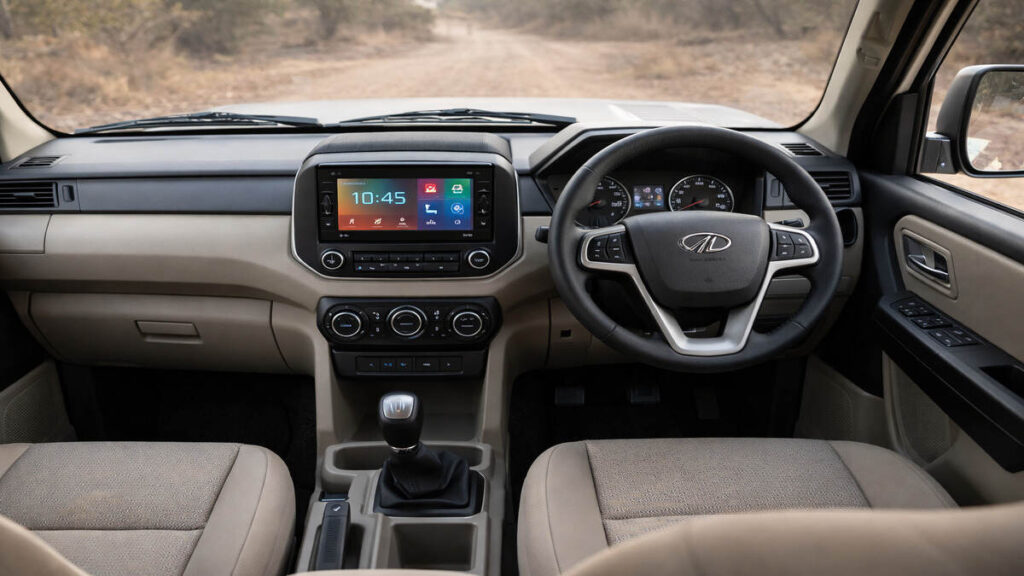
Still, Mahindra has added some useful things:
- Power steering (thankfully)
- Basic infotainment (in some variants)
- Power windows
- Central locking
- ABS
- Airbags (basic safety covered)
No big screens.
No sunroof.
No digital drama.
But everything that’s there… works. And keeps working.
Price & Variants (India)
Now the big question — money.
Ex-showroom price:
Around ₹9.8 lakh to ₹10.9 lakh (depending on variant)
On-road price (in our town):
Roughly ₹11.5 lakh to ₹12.8 lakh
Is it expensive?
At first glance, yes.
But when you think about durability, resale value, and low failure rate… it starts making sense.
This is a long-term vehicle.
Maintenance, Service & Ownership Cost
This is where Bolero shines.
- Mahindra service network is everywhere
- Parts are easily available
- Local mechanics also understand it well
Maintenance Cost
Yearly service cost stays reasonable.
Nothing fancy to break. No expensive electronics.
If you maintain it well, Bolero can easily run for 2–3 lakh km. I’ve seen it. Many times.
Ownership feels stress-free. And that matters.
Pros & Cons (Honest)
Pros
- Very strong and reliable
- Handles bad roads easily
- Good resale value
- Diesel mileage is practical
- Easy to maintain
Cons
- Outdated design
- Less comfort for long trips
- Heavy clutch in traffic
- Limited features
- Not very refined
Who Should Buy This Vehicle?
Best For:
- Rural and semi-urban buyers
- Farmers, contractors, business owners
- People who drive on bad roads daily
- Buyers who want long-term reliability
Avoid If:
- You want comfort and luxury
- You love modern features
- Your driving is mostly in city traffic
- You want silent, smooth rides
Final Verdict – Worth Buying or Not?
So… should you buy the Mahindra Bolero 2026?
If your heart wants comfort, style, and features — no.
If your mind wants strength, reliability, and peace of ownership — yes.
This is not a lifestyle car.
This is a life car.
It doesn’t impress.
It endures.
And sometimes, that’s exactly what Indian roads demand.
FAQs – Mahindra Bolero 2026
1. Is Mahindra Bolero 2026 good for daily use?
Yes, especially if your daily roads are rough or broken. In heavy city traffic, it can feel tiring.
2. What is the real mileage of Mahindra Bolero 2026?
In real Indian conditions, expect around 13–14 km/l in city and 15–16 km/l on highways.
3. Is the Bolero 2026 better than the Mahindra Bolero Neo?
Bolero Neo is more modern and comfortable. Bolero 2026 is tougher and more rugged.
4. Is the Mahindra Bolero comfortable for long drives?
It’s okay for medium trips. For very long journeys, comfort is average.
5. Does Bolero 2026 have good resale value?
Yes. Bolero’s resale value is one of the strongest in its segment.
6. Is the Mahindra Bolero safe?
It offers basic safety like airbags and ABS, but it’s not loaded with advanced safety tech.
7. Who should not buy the Mahindra Bolero 2026?
Buyers looking for luxury, modern features, or smooth city comfort should avoid it.